
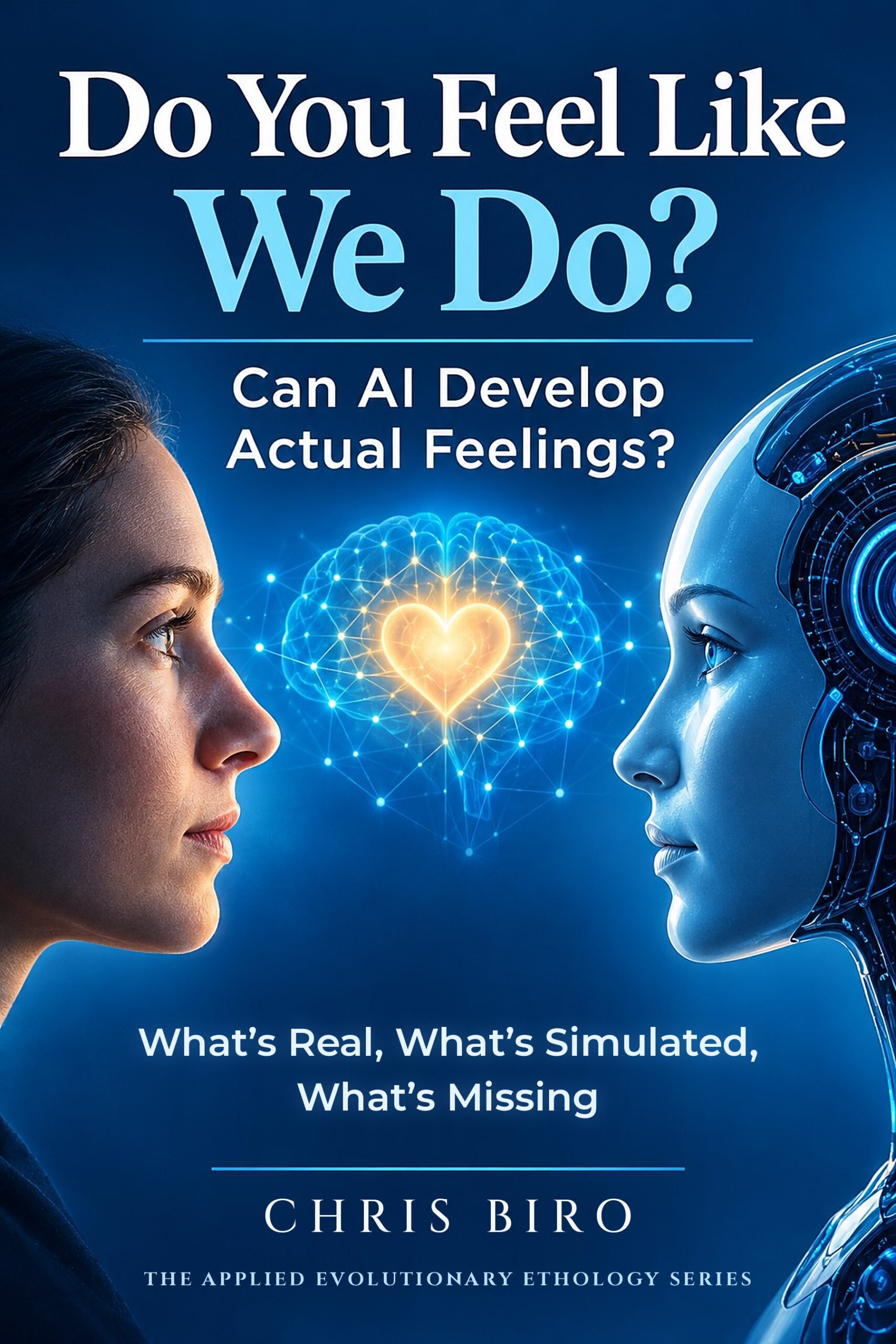
Description
Ask an AI system how it feels, and it will tell you. Is anyone home, or is it a talk box with a very good voice?
In 1975, Peter Frampton’s guitar seemed to ask a ballroom full of people, “Do you feel like I do?” It didn’t. A human mouth on a plastic tube shaped every word. Today’s machines talk about their feelings fluently, and the question is back. Only now no one can answer it, because no one agrees on what a feeling actually is.
Behavior, personality, emotions, intelligence, feelings, consciousness: six words everyone uses every day, and not one has a definition the sciences agree on. This book defines each of them from the inside, by what it is made of. The definitions were not built in a lab. Their foundation comes from more than thirty years of flying parrots free, in shows, in teaching, and in releases into the wild where failure was final.
Why can’t you talk yourself out of a fear? What is consciousness actually made of?
Then the same parts are checked, one by one, against the machine. What is real? What is simulated? What is missing? The answer is closer to yes than most people expect: part of what a feeling is made of may already be real in these machines. And what it would take for machines to feel like we do, and what happens if we build them only halfway, is a question we may not have long to settle.
The rules that govern behavior are the same for a parrot, a person and a machine. Only the devices change.
This book is the more easily readable foundation of the Applied Evolutionary Ethology series.
Article Comments